

LalBrew Wit Belgian Wit Ale Yeast 11g
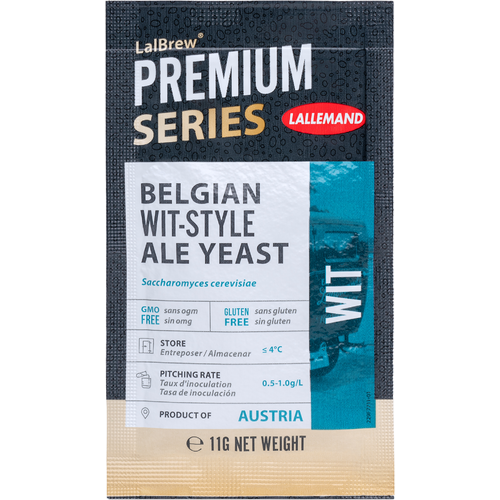
LalBrew Wit Belgian Wit Ale Yeast 11g
Formerly Lallemand Munich Yeast
Request a quote
Need a custom build, freight order, or just want pricing in writing before you order? Quotes back within 24 hours.
LalBrew Wit (formerly Munich Wheat) yeast is a relatively neutral strain which can be used to produce a wide variety of wheat beer styles. Ester and phenol production is lower than for traditional hefeweizen strains such as Munich Classic. LalBrew Wit provides a baseline profile of banana and spice aromas, but leaves space for the brewer to showcase other spice additions typical of Belgian style beers.
Traditional styles brewed with this yeast include but are not limited to Belgian Witbier, American Wheat, Berliner Weiss, Gose, Hefeweizen, Dunkelweis, and Weizenbock.
Microbiological Properties
Classified as a Saccharomyces cerevisiae, a top fermenting yeast.
Typical Analysis of LalBrew Wit Yeast:
- Percent solids 93% – 97%
- Living Yeast Cells ≥ 5 x 10⁹ per gram of dry yeast
- Wild Yeast < 1 per 106 yeast cells
- Bacteria < 1 per 106 yeast cells
Finished product is released to the market only after passing a rigorous series of tests
*According to the ASBC and EBC methods of analysis
Brewing Properties
In Lallemand’s Standard Conditions Wort at 20°C (68°F) LalBrew Wit yeast exhibits:
Vigorous fermentation that can be completed in 4 days
Medium to High attenuation and Low flocculation
Aroma and flavor is somewhat estery with banana notes
The optimal temperature range for LalBrew Wit yeast when producing traditional styles is 17°C(63°F) to22°C(72°F)
Fermentation rate, fermentation time and degree of attenuation are dependent on inoculation density, yeast handling, fermentation temperature and nutritional quality of the wort.